
-
Engagement Rings
Collections
Design your perfect ring with the Compar.. Discover the perfect Engagement Rings by..
A coloured diamond turns a classic engag..
- Bespoke Design
-
Diamonds
Collections
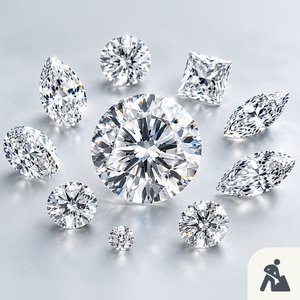 Venture into our opulent assortment of c..
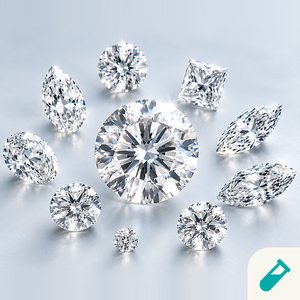 Search our stunning designs of certified..
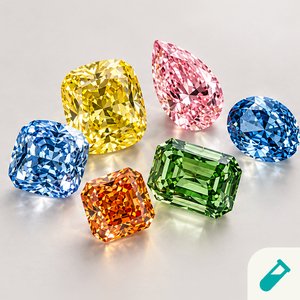 Discover the brilliance of coloured lab-..
- Eternity Rings
-
Wedding Rings
Wedding Ring Collections
Discover plain polished wedding rings, c..Metal Options


 Make your love shine with our diamond-se..
Wedding Rings by Width - Find Your Perfe..
Our 9ct gold wedding rings are solid gol..
An 18ct gold wedding ring is 75% pure go..
Wedding Rings by Style - Modern & Classi..Metal Options
-
Diamond Earrings
Collections
Shop yellow gold by purity: 18ct yellow ..
Shop white gold by purity: 18ct white go..
Shop rose gold by purity: 18ct rose gold..
Sophisticated platinum diamond earrings,..
Discover our artistic designs of classic..
A timeless jewellery essential, these Ha..
Explore our diamond and coloured stone e.. -
Diamond Pendants
Collections
Examine our excellent array of platinum ..
Peruse out our impeccable selection of 1..
Discover our magnificent lineup of 18ct...
Check out our exquisite portfolio of 18c.. -
Diamond Bracelets
Collections
Diamond Tennis Bracelets: Lab-Grown or M..
Tennis Bracelets: A Touch of LuxuryBrows..
Luxurious Tennis Bracelets: Perfection a..
A 9ct gold tennis bracelet gives you a f..
Tennis Bracelets: Timeless EleganceOur d.. -
Right-Hand Rings
Collections
-
Men's Rings
Collections
Peruse out our majestic designs of men's..
Search our refined category of men's des..
Peruse out our excellent gathering of me..
Uncover our impeccable assembly of men's..
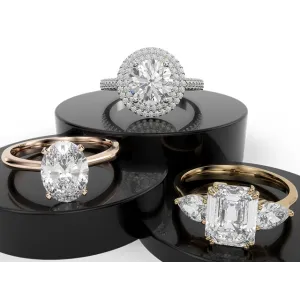






Fine jewellery, made to order
High-End Jewellery
Big diamond engagement rings, diamond necklaces, tennis bracelets and cocktail rings, designed around the diamonds you choose and made to order in our own workshop. Natural or lab-grown, certified, set in hallmarked 100% recycled platinum or gold.
Every high-end piece is drawn in 3D before it is made, so you see exactly what you are getting and agree a fixed price first.

What makes jewellery high-end?
High-end jewellery, also called fine jewellery or high jewellery, is jewellery where the stones are the point: a centre diamond of 2, 3 or 5 carats, a necklace of dozens of matched diamonds, a bracelet that catches the light across a room. These are pieces bought once in a lifetime, often for an engagement, a big anniversary or to hand down.
Size alone does not make a piece high-end. What matters is how well the diamonds are cut, how closely the smaller stones are matched to each other and to the centre stone, how securely they are set, and how well the metal is finished where you cannot see it. That is where a jeweller who makes the piece, rather than buys it in, makes the difference.
- Certified diamonds: every centre stone graded independently for carat, colour, clarity and cut.
- Matched stones: the diamonds in a line or cluster chosen to look the same colour and brightness side by side.
- A setting drawn for the stone: claws, head and band designed around your diamond, not a standard size scaled up.
- Precious metal throughout: 100% recycled platinum or 18ct gold, hallmarked.
Big diamond engagement rings: 2 to 10 carats
A large diamond engagement ring is the most popular high-end piece we make. Choose a 2 carat, 3 carat or 5 carat natural diamond, or a 3 carat or 5 carat lab-grown diamond, and we design the ring around it as a solitaire, a halo, a three-stone ring or on a diamond-set band. You can start from one of our engagement rings or build the ring yourself in our 3D Ring Maker.
Shapes that look biggest
Elongated shapes spread their weight across a larger face, so they look bigger from above than a round diamond of the same weight. Oval, pear and marquise diamonds are the classic choice for a big look; an emerald cut looks long and elegant, with a hall-of-mirrors sparkle rather than fire. A halo of small diamonds around the centre stone makes any shape look larger again.
Settings that hold a large stone
A big diamond needs more support than a small one. Six claws, or double claws, hold a large round or oval securely; pear and marquise diamonds need a V-shaped claw to protect the point; a bezel setting wraps the edge in metal for the most secure everyday ring. We keep the head as low as the stone allows, so the ring sits comfortably and does not catch. Platinum claws are a good choice for a large stone, as they wear well over the years.
Diamond necklaces, chokers and collars
A diamond necklace is high jewellery at its most striking. A riviera or line necklace is a single row of diamonds all the way round, either the same size or graduating towards the centre. A diamond choker sits close at the base of the neck, around 35 to 40cm; a collar is wider and more structured. A pear or drop pendant, like the necklace above, puts one large stone or a cascade of diamonds at the centre.
Because a necklace can hold a lot of diamond, a lab-grown diamond necklace is often the way to have the look of a full riviera at a fraction of the natural price. Every stone is matched to its neighbours for colour and brightness, so the line looks even from end to end. See our diamond pendants, or tell us what you have in mind and we will draw it for you.
Tennis bracelets, cocktail rings and statement rings
Diamond tennis bracelets
A continuous line of matched diamonds in a flexible setting, from everyday weights up to bracelets of 5 carats and more, with a secure clasp. See our diamond tennis bracelets.
Cocktail rings
A cocktail ring is made to be noticed: a large centre stone, often coloured, raised high in a cluster or halo and usually worn on the right hand. See our right-hand rings, or ask us to design one around a coloured diamond.
Statement rings
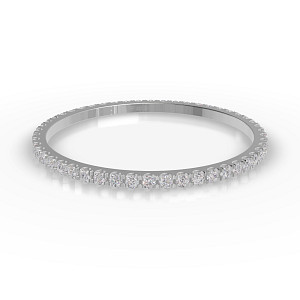
Wide, fully set and many-stone rings that carry a lot of diamond without a single large stone. See our statement wedding rings and statement eternity rings, or design your own eternity ring in 3D with our Eternity Builder.
How to choose a large diamond
The bigger the diamond, the more each of the four Cs shows. A grade that is invisible in a half carat stone can be easy to see in a 3 carat one, so it pays to choose with care.
- Cut: the single biggest factor in how bright a diamond looks. For a round diamond, choose an excellent cut. For ovals, pears and marquises, look for an even outline and a small or faint bow-tie, the dark band across the middle.
- Colour: a large stone shows its body colour more. In platinum or white gold, D to G keeps it icy white; in yellow or rose gold, H or I can look just as white.
- Clarity: brilliant cuts (round, oval, pear, cushion) hide small inclusions well, so a VS or a clean SI1 is often eye-clean. Step cuts (emerald, asscher) show more, so VS1 or better is the safer choice.
- Carat: prices jump at whole and half carats. A 2.9 carat diamond looks the same as a 3 carat one on the hand and can cost noticeably less.
- Certificate: always buy a large diamond with an independent grading certificate, and look at the stone's real photos and video, not just the numbers. You can do both in our diamond search.
Natural or lab-grown?
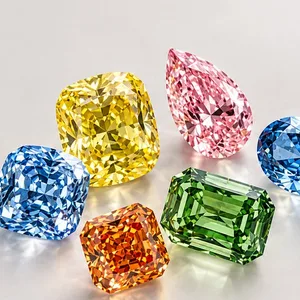
Both are real diamonds, with the same hardness, fire and sparkle; only a laboratory can tell them apart. Lab-grown diamonds cost much less carat for carat, which puts a 3 or 5 carat centre stone, or a necklace of many matched diamonds, within reach. Natural diamonds are rarer, and many people prefer them for a piece meant to be handed down. For something truly one of a kind, see our coloured diamond engagement rings in pink, yellow, blue and green.
How we make a high-end piece
-
Tell us your idea
Send pictures of pieces you like on WhatsApp, book a video call, or start a ring in our Ring Maker.
-
Choose the diamonds
We find stones to your budget and send you their certificates, photos and videos to compare.
-
Approve the design
We draw the piece in 3D CAD around your diamonds and send you realistic pictures. You get a fixed price.
-
Made in our workshop
Cast in 100% recycled platinum or gold, set, polished and hallmarked, usually 3 to 4 weeks from design approval.
-
Delivered to you
Free UK delivery. Everything is made to order for you.
Looking after high-end jewellery
- Insure it: add the piece to your home insurance or a specialist jewellery policy for its replacement value, and keep the certificate and invoice somewhere safe.
- Check the settings: have the claws and settings checked by a jeweller once a year, and straight away if a stone ever feels loose.
- Wear it last, take it off first: put jewellery on after perfume and creams, and take rings off for the gym, gardening and cleaning.
- Store pieces apart: diamonds scratch other jewellery and each other, so keep each piece in its own pouch or box.
- Clean it gently: warm water, a little washing-up liquid and a soft brush bring back the sparkle.
Why buy high-end jewellery from Comparethediamond.com
Family jewellers since 1969
A family business in Bourton-on-the-Water, Gloucestershire, and members of the National Association of Jewellers.
Designed and made by us
Drawn in 3D CAD and made to order in our own workshop, so the setting is made for your diamond.
Clear prices
Certified natural and lab-grown diamonds with real photos and video, and a fixed price before anything is made.
Also see our bespoke jewellery service and jewellery remodelling ideas for resetting diamonds you already own.
High-end jewellery questions
What is high-end jewellery?
High-end jewellery, sometimes called fine jewellery or high jewellery, is jewellery built around a lot of diamond or one important stone: engagement rings with a centre diamond of 2 carats or more, diamond necklaces, tennis bracelets of several carats, cocktail rings and fully set statement rings. What makes a piece high-end is the quality and matching of the stones and the care in the making, not just the size.
Can you make a ring with a 3, 5 or 10 carat diamond?
Yes. Choose the diamond in our diamond search or ask us to find one, and we design the setting around it. A large stone needs a head and band drawn for that diamond, so it sits securely and comfortably, rather than a standard setting scaled up.
Natural or lab-grown diamonds for a big piece?
Both are real diamonds, with the same hardness, fire and sparkle. Lab-grown diamonds cost much less carat for carat, which puts a 3 or 5 carat centre stone, or a necklace of many matched diamonds, within reach. Natural diamonds are rarer, and many people prefer them for a piece meant to be handed down. We offer both, certified.
Which diamond shape looks biggest for its carat weight?
Elongated shapes such as oval, pear and marquise spread their weight across a larger surface, so they look bigger from above than a round diamond of the same carat weight. Emerald cuts look long and elegant but have a smaller face for their weight. A halo of small diamonds makes any centre stone look larger again.
What colour and clarity should I choose for a large diamond?
The larger the diamond, the easier it is to see its colour and inclusions. For a white stone in platinum or white gold, D to G colour keeps it bright; in yellow gold, H or I can look just as white. Brilliant cuts such as round, oval and pear hide small inclusions well, so a VS or a clean SI1 is often eye-clean. Step cuts such as emerald and asscher show more, so VS1 or better is safer.
Are the diamonds certified?
Centre diamonds of this size come with an independent grading certificate for carat, colour, clarity and cut, and you see it before you choose the stone, with its photos and video. The smaller diamonds in a piece are matched for colour and clarity so the whole piece looks even.
Can I see the design before it is made?
Yes. Every high-end piece is drawn in 3D CAD around your diamonds, and we send you realistic pictures before anything is made, so you can change the proportions, the setting or the metal first. You get a fixed price for the design you approve.
How long does a high-end piece take?
Usually 3 to 4 weeks from when you approve the design. Very large stones, or pieces with many matched diamonds, can take a little longer to source, and we will tell you before you go ahead.
Is high-end jewellery a good investment?
Buy it because you will love wearing it. Rare natural diamonds and precious metals have lasting value, but jewellery is not a guaranteed investment, and lab-grown diamonds in particular are best chosen for beauty rather than resale. Keep the certificate and invoice, and insure the piece for its replacement value.
How should I look after a large diamond piece?
Have the claws and settings checked by a jeweller every year, take rings off for the gym, gardening and cleaning, store each piece separately so diamonds do not scratch other jewellery, and clean it in warm soapy water with a soft brush. Add it to your home insurance or a specialist jewellery policy.
Can I use my own diamonds or old jewellery?
Yes. Diamonds from inherited or old jewellery can be checked and reset in a new piece, and your gold or platinum can be reused or taken in part exchange. See our jewellery remodelling ideas.
How do I get started?
Message us on WhatsApp with what you have in mind, book a video call, or call us. Pictures of pieces you like are a great starting point.
Start your piece
Tell us what you have in mind. There is no obligation until you approve a design and price.